Celebrating Eid al-Fitr around the World
We’re a few days away from Eid al-Fitr.
We’re a few days away from Eid al-Fitr. If you’re here to learn what the holiday represents or how Muslims celebrate it, it must mean you want to impress your date by studying its meaning. Or, you’re just here out of curiosity. Whatever your goal may be, you’ve come to the right place!
This month, let’s talk about the significance of Eid al-Fitr—and when it is celebrated. Let’s also nail down how people from different walks of life commemorate it. This, hopefully, helps solve your interfaith conundrum or research goals.
1. Eid al-Fitr—a brief lowdown
Eid al-Fitr is a religious holiday celebrated by Muslims worldwide. It marks the culmination of the month-long dusk–to–dawn fasting of Ramadan.
There are two equally important Eids in Islam: Eid al-Fitr and Eid al-Adha—both coincide with a pillar of the Islamic faith. Eid al-Fitr, also known as the Festival of Breaking Fast in Arabic, is a month of mercy and forgiveness. Muslims believe that the Holy Quran was revealed to the Prophet Muhammad during these times.
Celebrated on the days of the hajj pilgrimage, Eid al-Adha—on the other end—honors Prophet Ibrahim’s readiness to sacrifice his only son. This occasion is equally important as it proves his faithfulness to Allah.
2. When is Eid al-Fitr?
The Eid al-Fitr celebration date depends on the moon’s sighting. Hence, there may be variations in the exact date. Nonetheless, religious leaders announce the dates on days leading up to Ramadan.
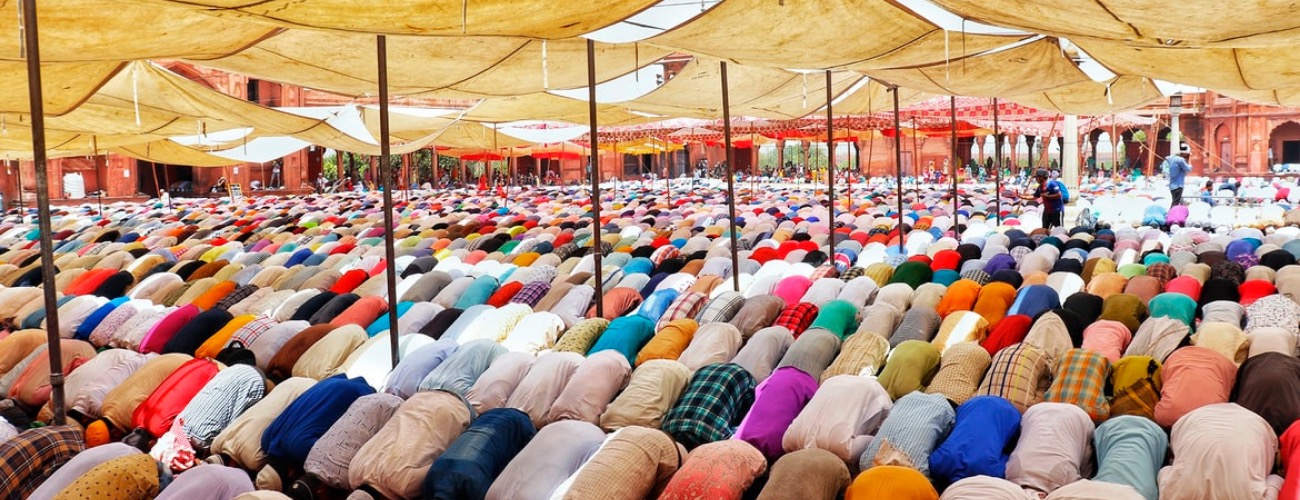
Moreover, Eid-al-Fitr lasts for three days. Muslims worldwide observe the three-day festivity by praying at Mosques, feasting, family reunions, exchanging gifts, and helping the poor.
3. Eid al-Fitr Celebrations Worldwide
Like other people belonging to a particular religion, Muslims live in different areas of the globe. In most cases, they are the majority faith community, while in some regions, they’re not.
In the same manner, although there are standard practices Muslims do to celebrate Eid al-Fitr, there are undoubtedly nuances to these customs. As such, take a look at how countries worldwide celebrate this important Muslim holiday.
4. Egypt
In Egypt, where most people are Muslims, families visit relatives on the first day of Eid al–Fitr. Others also go to public places with loved ones after morning prayers at the mosque. Popular destination sites during this religious holiday are Al Fustat Garden and Giza Zoo.
The buzzing streets of Cairo also come alive as Egyptian Muslims celebrate Eid al–Fitr. There are many other customs in Egypt, but the most famous—and quite frankly, more exciting—is the giving of Eidi to children. Also known as Salami, it is a gift given to children by older relatives or family friends as part of the holiday.
5. Iceland
While the Islamic population in Iceland is considerably low—with only 0.4% of them, according to Pew Research—their celebration is definitely not to be underestimated!
Leading up to the celebration Eid al–Fitr, Icelandic Muslims also participate in the dawn-to-sunset fast during Ramadan. Since it’s the summer and the sun is up longer than usual, the sun sets at midnight and returns two hours later. It means Icelandic Muslims fast up to 22 hours a day.
True, it does sound like a real challenge. Hence, Islamic leaders offered an option to solve this problem for those living in the area. Local Muslims can break their fast depending on the sunrise and sunset time zones in the country near them. They could also choose to follow Saudi Arabia’s time zone.
Nevertheless, most Icelandic Muslims celebrate Eid al–Fitr in mosques in Reykjavík—Iceland’s capital city. To make the holiday more memorable, many religious locals visit mosques, carrying traditional scrumptious cuisine. They typically share them with friends and family.
On the other hand, children wear their newly bought clothes—it’s a tradition to buy new ones—and exchange gifts with other kids in the mosque.
6. Kenya
Kenyan Muslims usually gather in the Rahma Mosque on Eid al–Fitr. During gatherings, faithful leaders generally talk about important ways to help the poor. Hence, many Muslim locals offer alms to the less fortunate. It is also their way of spreading joy and happiness.
Moreover, religious leaders also urge local Kenyan Muslims to reflect, be grateful, and remain faithful during the festive season.
7. Singapore
A burst of colors illuminates the entire streets in Geylang Serai on Eid al–Fitr in Singapore, highlighting the importance of the holiday in the country.
This bright and sunny island shows over 50 lights and visual installations annually displaying a kaleidoscope of colors. This is to make Muslim locals and visitors feel that Singapore’s with them during this important festival.
Geylang Serai is also home to the annual Ramadan bazaar, one of the country’s oldest Malay villages. With food as the centerpiece of the bazaar, over a hundred street food vendors serve a hearty spread of traditional Malay cuisine in their stalls.
And, with the Instagram-worthy foods being many millennials’ standards of delicious food, vendors have also been serving pretty-looking food choices. This includes bubble–tea desserts and toasted marshmallows on a stick.
8. Turkey
As of July 2018, about 99% of the Turkish population are Muslims. On Eid al-Fitr, families from all over the country reunite to observe the holiday. During this time, families cook traditional meals—this task usually falls upon the women in the family. It typically happens on day one of the celebrations.
Meanwhile, the second day of the Eid al-Fitr festivities suggests lounging by the beach with loved ones. Turkish Muslims also flock to the beach to take advantage of the hot climate where they go swimming or fishing—or anything they can think of!
9. Have a blessed celebration!
Eid al-Fitr is one of the cornerstones of the Muslim holidays. While Eid is an excellent time for large family reunions, it’s also a perfect moment for tourists to understand the Muslim community during this special event.
Undoubtedly, celebrating Eid al-Fitr with family and friends is essential to the tradition. But, spending it with your halal date after praying at the mosque might also be a good idea.
Nevertheless, whoever you wish to spend this holiday with, be sure you celebrate it with those who understand and respect your beliefs.